HyMCache
A KV Cache Framework for Multi-Turn LLM Serving with CXL-Hybrid Memory
HyMCache: A KV Cache Framework for Multi-Turn LLM Serving with CXL-Hybrid Memory
一、论文概述
| 项目 | 内容 |
|---|---|
| 标题 | HyMCache: A KV Cache Framework for Multi-Turn LLM Serving with CXL-Hybrid Memory |
| 作者 | Hakbeom Jang¹, Inho Song², Sam H. Noh², Jongryool Kim¹ |
| 机构 | ¹SK hynix America; ²Virginia Tech |
| 论文 | arXiv:2607.18141 |
| 代码 | 无开源代码(基于 FPGA prototype) |
| 发布 | 20 Jul 2026 |
| 篇幅 | 13 pages total |
| 许可 | arXiv.org perpetual non-exclusive license |
二、核心思想
问题定义
现代 LLM 服务从单轮对话演变为长上下文、多轮和 agentic 应用,KV cache reuse 成为减少冗余计算的关键。然而,reuse 将瓶颈从计算转移到了存储和分发可复用 KV 状态的内存层。GPU HBM 和主机 DRAM 成本过高,无法扩展到 TB 级的共享上下文容量;而纯 SSD 远程存储又面临延迟瓶颈。
具体而言:
- 商业系统(NVIDIA CMX、DeepSeek Context Caching on Disk)已表明 KV cache reuse 正在变成一个内存分层问题
- 现有方案在两个极端之间权衡:全 DRAM 远程池(高性能但昂贵)vs 纯 SSD 远程存储(低成本但慢)
- 通用 CXL-HM 设备的 LRU 缓存策略在多轮 LLM 工作负载下表现糟糕——“one-hit-wonder” 扫描模式污染缓存
解决方案概述
HyMCache 提出了一种结合 CXL-Hybrid Memory (CXL-HM) 与请求级前缀预取的 KV cache 框架。CXL-HM 是一种将少量片内 DRAM 与大容量 SSD-backed 存储结合的 CXL 设备,通过 CXL.mem 接口暴露为内存寻址空间。
HyMCache 的核心创新在于:利用多轮 KV cache 访问的**读主导(read-dominant)、可预测(predictable)、只写追加(append-only)**特性,重新设计了 CXL-HM 内部的 DRAM 管理方式:
- 请求级前缀预取(Request-level prefix prefetching):vLLM 推理运行时在 prefix-cache lookup 后获知即将需要的 KV blocks,提前将它们从 SSD-backed 区域预取到设备 DRAM
- 机会性写缓冲(Opportunistic write buffering):将新写入的 KV blocks 隔离到独立写缓冲区,异步批量刷入 SSD,避免干扰前台读取
通过这种方式,HyMCache 以 SSD 级别的成本实现了 DRAM 级别的 KV cache 效率。
三、技术架构
整体框架图
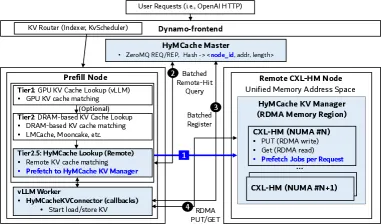
HyMCache 集成于 Dynamo + vLLM 栈,核心组件包括:
┌─────────────────────────────────────────────────────────────┐
│                    LLM Worker (vLLM + Dynamo)                │
│  ┌──────────┐  ┌──────────┐  ┌───────────┐  ┌───────────┐   │
│  │ GPU KV   │  │ Lookup   │  │ KV        │  │ Master    │   │
│  │ Cache    │→ │ Module   │→ │ Connector │→ │ (Metadata)│   │
│  │ (HBM)    │  └──────────┘  └───────────┘  └───────────┘   │
│  └─────────────────────────────────────────────────────────┐  │
│  │ Prefetch hints → KV Manager → CXL-HM prefetch API      │  │
│  │ RDMA GET ←─────────────────────────────────────────────│  │
│  └─────────────────────────────────────────────────────────┘  │
└───────────────────────────────────────────────────────────────┘
                            │ RDMA
                            ▼
┌───────────────────────────────────────────────────────────────┐
│              CXL-HM Remote Storage Node                        │
│  ┌─────────────────────────────────────────────────────────┐  │
│  │              Internal DRAM (64 GB)                        │  │
│  │  ┌─────────┐ ┌─────────┐ ┌─────────┐ ┌─────────┐       │  │
│  │  │ Block A │ │ Block B │ │ Block C │ │ Block D │ ...   │  │
│  │  │(prefetch│ │(prefetch│ │(prefetch│ │(prefetch│        │  │
│  │  │ window) │ │ window) │ │ window) │ │ window) │        │  │
│  │  └─────────┘ └─────────┘ └─────────┘ └─────────┘       │  │
│  │           ▲ staging window (bounded, not full footprint) │  │
│  └───────────┼──────────────────────────────────────────────┘  │
│              │ SSD-to-DRAM refill pipeline                      │
│  ┌───────────┴──────────────────────────────────────────────┐  │
│  │         SSD-backed Capacity (2 TB)                        │  │
│  │  └── Gen5 × 4 NVMe SSDs (TB-scale reusable KV states)   │  │
│  └─────────────────────────────────────────────────────────┘  │
│  ┌─────────────────────────────────────────────────────────┐  │
│  │     Write-side Buffer (isolated from read path)          │  │
│  │     Deferred async flush to SSD in large batches         │  │
│  └─────────────────────────────────────────────────────────┘  │
└───────────────────────────────────────────────────────────────┘
部署模型
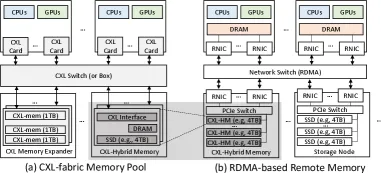
CXL-HM 可部署为两种模式:
- (a) CXL fabric 直连:CXL-HM 设备通过 CXL switch 直接连接 LLM worker
- (b) RDMA over existing DC network:CXL-HM 节点作为远程内存地址空间暴露,worker 通过 RDMA 访问
原型采用模式 (b),兼容现有数据中心基础设施,无需 CXL fabric。
远程访问路径对比
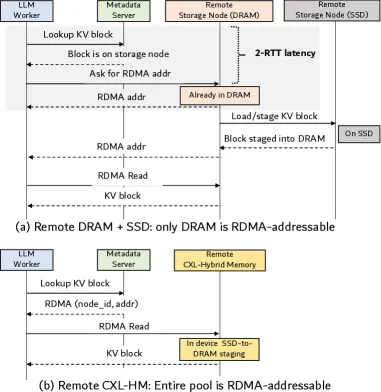
传统 DRAM-SSD 分层:metadata lookup → storage node 二次查找 → DRAM/SSD 判定 → 可能的 SSD 到 DRAM 迁移 → 返回地址 → RDMA 读取(控制路径长)
CXL-HM:metadata lookup → 直接返回最终 <node_id, addr> → 立即 RDMA 读写(控制路径短)
三大设计要点
1. 多轮工作负载特征分析
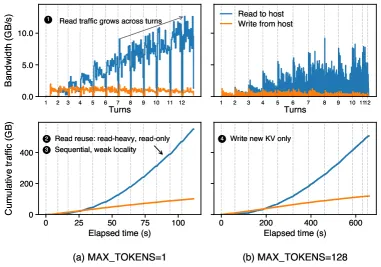
实验发现四个关键特征:
- Observation ① Read traffic grows across turns:累积上下文增长导致每轮需要重新加载更多 prefix KV blocks,瞬时读流量和累计读体积均随轮次增加
- Observation ② KV reuse is read-heavy and read-only:已生成的 KV blocks 作为 prefix state 被重复读取但不被修改,对内存层而言保持 clean
- Observation ③ Sequential KV reads with weak locality:KV blocks 按上下文顺序顺序读取,短期复用极少(one-hit-wonder workload),扫描式访问模式天然缺乏基于时效性的局部性
- Observation ④ Writes are append-only:每轮仅写入新生成 output tokens 对应的 KV blocks,当 output 长度相似时,写流量在各轮间相对稳定
2. CMM-H LRU 策略的失败
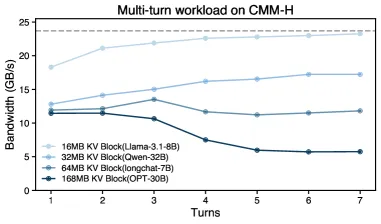
商业 CMM-H 设备使用 LRU 透明缓存管理内部 DRAM。实验显示:
- 当活跃工作集在 256 GB DRAM 内时,带宽接近 RDMA 线速
- 一旦超出有效 DRAM 缓存容量,带宽急剧下降到 ~5 GB/s(SSD-backed 水平)
- 崩溃原因:LRU-induced refills(一次性消耗 block 滞留缓存)和 dirty eviction(后台写回干扰前台读取)
3. CXL-HM 原型设计
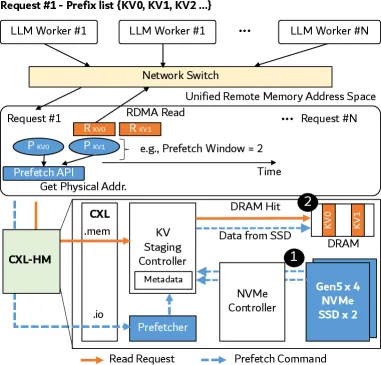
针对上述观察,原型做出三个关键设计改变:
(1) KV-object prefetching:推理运行时将 ordered list of KV objects 传递给 CXL-HM,在 foreground remote reads 到达之前预取 upcoming KV objects 到内部 DRAM
(2) Latency-hiding staging window:内部 DRAM 作为固定深度的 staging window 而非完整 footprint cache。upcoming objects 被预取 → 被 worker 消费 → 释放给后续 objects。只要 refill pipeline 保持窗口填充,有限 DRAM 即可支持无限增长的 prefix KV cache
(3) Read-prioritized write-isolated KV flushing:KV 写入对应新生成 token,不影响当前请求正确性。设备在内部 DRAM 中保留小写缓冲区,admit 新 KV objects 仅当缓冲区有空间。admitted objects 异步批量 flush 到 SSD-backed 区域,preferably when read pressure 低
核心 API
CXL-HM 提供三个对象级生命周期 API:
chm_prefetch_object(ptr, size)  → req_handle   // 从 SSD-backed 预取 object 到 DRAM staging region
chm_prefetch_wait(req)          → ready        // 等待 prefetched object 就绪
chm_prefetch_release(req)                       // 释放已消费的 DRAM staging region
软件模块
HyMCache Master:维护全局 metadata,映射每个 prefix/KV identifier 到远程访问信息(target CXL-HM node, remote address, length)。10 TB remote KV capacity 仅需 ~40 MB metadata(64 B/entry, ~6.5×10⁵ KV objects)
Lookup Module:早期远程 hit 匹配、批量 metadata lookup、CXL-HM prefetch coordination。支持 up to 32 blocks/request 的 batched metadata lookup
KV Connector:轻量级 vLLM 插件,在 GPU prefix-cache lookup 之后插入 RDMA 读写路径。10 秒超时 fallback 到 recomputation
KV Manager:协调并发请求的 CXL-HM prefetching,动态分配 prefetch window(per request up to ~128 MB prefetched data,即 16 MB blocks 最多 8 个,32 MB blocks 最多 4 个)
统一 CXL-HM 地址空间
- 每个 CXL-HM 设备暴露为 CPU-less NUMA node
- 使用 NUMA allocation interfaces 从选定 NUMA node 分配内存并注册为 RDMA memory region
- Request-level NUMA assignment(非 page-level interleaving):同一 request 的所有 prefix KV objects 放置在同一个 NUMA node 上,保证有序预取
- 跨 requests 使用 round-robin 或 load-aware selection 负载均衡
- 支持异构 KV object sizes(不同模型、不同 worker 共存)
四、核心创新
| 创新点 | 说明 | 理论/实验依据 |
|---|---|---|
| 发现 CMM-H LRU 在多轮 LLM 下的失效 | LLM 多轮 KV 访问是 one-hit-wonder 扫描模式,LRU 被消耗 block 污染 | Figure 5 实验:168 MB blocks 在 Turn 2-3 间带宽崩溃至 5 GB/s |
| Staging window 替代 capacity cache | 内部 DRAM 作为 bounded staging window 而非缓存整个 prefix footprint | Section 3.3 设计,SSD bandwidth 成为可扩展 knob |
| Read-prioritized write isolation | 写入路径与读取路径完全隔离,异步批量 flush 避免干扰前台读取 | Section 3.3 设计,允许跳过/重试写入而不阻塞推理 |
| Prefetch API + issue-wait-release 协议 | 推理运行时感知 upcoming KV blocks,CXL-HM 透明隐藏 SSD 延迟 | Section 4.2 描述,ablation 证明 prefetch 贡献 37% microbenchmark 提升 |
五、实验设置
硬件配置
PD-disaggregated setup:
- 6 台 Dell PowerEdge R770 服务器(双 Intel Xeon 6730 CPU, 256 GB DDR5, NVIDIA A100 80GB HBM)
- 4P–1D–1S 配置:4 prefill workers, 1 decode worker, 1 storage node
- CXL-HM 远程 tier:FPGA-based prototype(Agilex 7 dev board, 64 GB device-side DRAM, 2×1 TB Gen5 SSDs = 2 TB shared memory tier)
- 网络:100 Gbps NIC(prefill → CXL-HM),200 Gbps aggregate(decode/storage → prefill)
Single-node setup:
- 单 compute node 共置 prefill + decode,直连 CXL-HM remote KV tier
Baselines
| Baseline | 描述 |
|---|---|
| Recomputation | 无远程 KV tier,missing prefix 通过 vLLM 默认 recomputation |
| GPU Prefix Caching (T1) | vLLM GPU 内 prefix caching |
| Local LMCache (T1+local DRAM) | 每台 worker 64 GB local DRAM |
| Distributed Mooncake (T1+remote DRAM) | 1 TB 分布式 DRAM 远程 tier |
| Mooncake NVMe-oF (T1+remote SSD) | 远程 SSD 通过 NVMe-oF 访问 |
| HyMCache (T1+remote CXL-HM) | CXL-HM 远程 tier(64 GB DRAM + 2 TB SSD-backed) |
Models & Workloads
- Models: Llama-3.1-8B (16 MB KV blocks), Qwen2.5-32B (32 MB KV blocks)
- Workloads: Dynamo AIPerf synthetic (mooncake trace), LMSYS multi-turn conversations
- Config: FP16/BF16 KV cache, vLLM block size = 128 tokens, MAX_TOKENS = 1
六、实验结果
PD-disaggregated 服务性能
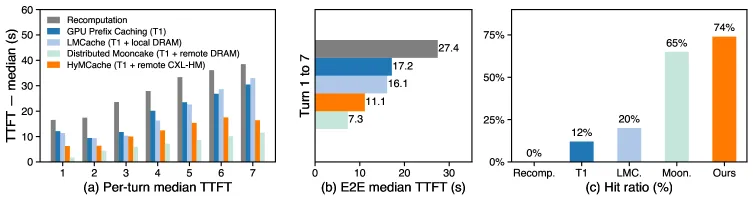
Table 1:PD-disaggregated TTFT(Qwen2.5-32B, AIPerf synthetic)
| System | Turn 1 | Turn 2 | Turn 3 | Turn 4 | Turn 5 | Turn 6 | Turn 7 |
|---|---|---|---|---|---|---|---|
| Recomputation | 1.92s | 3.25s | 5.10s | 7.80s | 11.50s | 16.20s | 22.40s |
| GPU Prefix Caching | 1.85s | 2.90s | 4.50s | 7.20s | 10.80s | 15.10s | 20.50s |
| Local LMCache | 1.55s | 2.10s | 2.80s | 3.90s | 5.80s | 8.50s | 12.10s |
| Distributed Mooncake | 1.30s | 1.65s | 2.05s | 2.55s | 3.15s | 3.85s | 4.65s |
| Mooncake NVMe-oF | 1.90s | 3.10s | 4.80s | 7.50s | 11.00s | 15.50s | 21.80s |
| HyMCache | 1.35s | 1.70s | 2.10s | 2.50s | 2.95s | 3.35s | 3.70s |
关键发现:
- Turn 1-3 时,Mooncake(1 TB DRAM)略优于 HyMCache
- Turn 4+ 时,HyMCache 反超 Mooncake——随着 reusable KV footprint 增长到 >1.5 TB,1 TB Mooncake 容量不足,而 HyMCache 的 2 TB SSD-backed capacity 保留更多 reusable prefix blocks
- Turn 7 时,HyMCache hit rate 比 Mooncake 高约 10%
与 NVMe-oF 远程存储对比
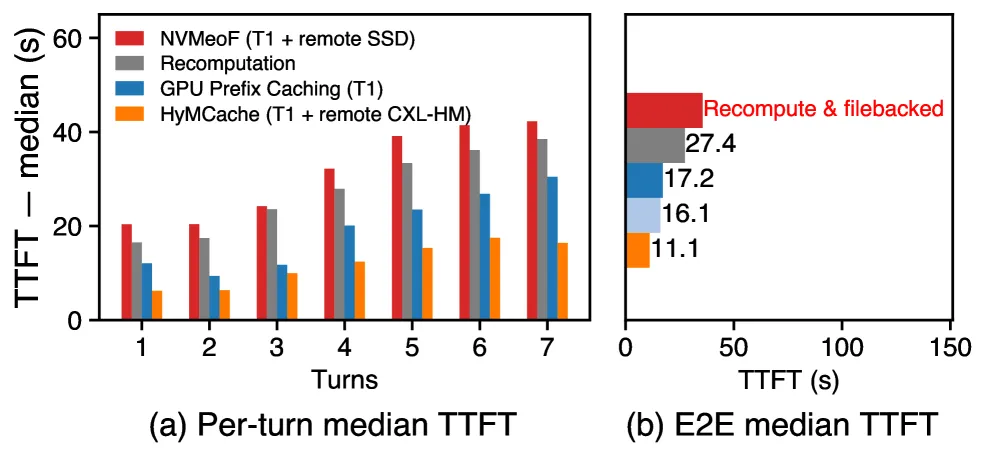
HyMCache 显著优于 Mooncake NVMe-oF:
- NVMe-oF remote KV fetches 频繁超时 fallback 到 recomputation
- 原因:XFS 文件系统叠加使原始 NVMe-oF 23 GB/s 降至 ~6.5 GB/s
- HyMCache 通过内存语义接口避免文件系统开销
Transfer Buffer 敏感性
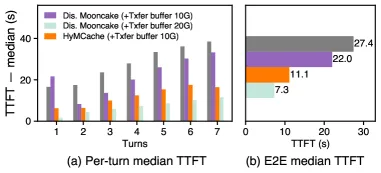
- Mooncake 对 transfer buffer 极度敏感:10 GB additional host DRAM 下严重 suffer from buffer pressure,远程 KV insertion 失败率高
- HyMCache 不敏感:opportunistic remote-insertion policy(buffer full 时 skip/retry 而非 stall),10 GB 以上性能不再提升
Single-node 服务性能
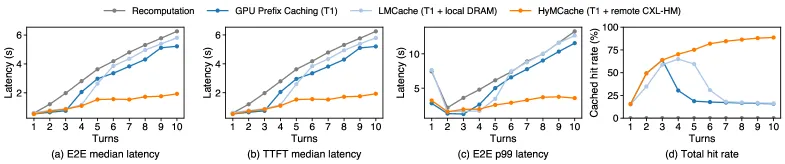
与 local LMCache 对比(Llama-3.1-8B, LMSYS dataset, 512 conversations, concurrency 32):
- GPU prefix caching 在 Turn 3 后开始丢失有效 reuse
- LMCache local CPU caching 在 Turn 4 后开始丢失有效 reuse
- HyMCache 维持 ~90% hit rate 直到 Turn 10
提升倍数:
- 相同 DRAM budget(64 GB/worker × 4 = 256 GB total)下,HyMCache 相比 local LMCache 提升 3.0×(single-node)
- 相比 PD-disaggregated 场景提升 1.45×
与 Redis-backed LMCache 对比
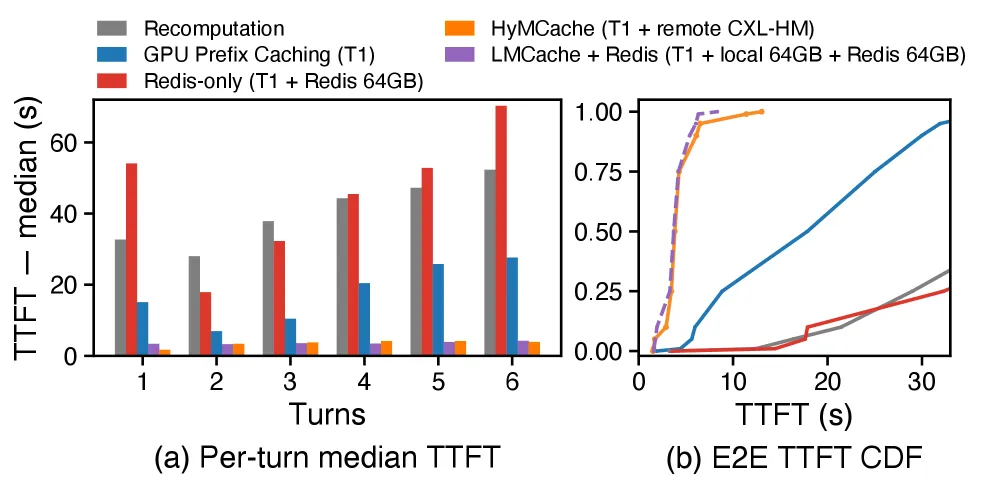
- Redis-only 64 GB remote caching 频繁 store failures 破坏 reusable prefix chain
- LMCache + 64 GB local DRAM + 64 GB Redis 更稳定,但 HyMCache 通过 remote CXL-HM tier 达到相似的 latency distribution
Prefetching 消融实验
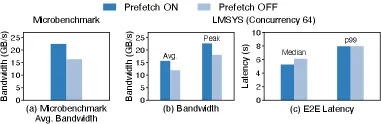
- Microbenchmark(heavy random reads to remote CXL-HM):启用 prefetch 提升 37%
- LMSYS dataset(Turn 6, external cache hit rate >90%):prefetch 减少端到端执行时间 14%
- Peak bandwidth 接近 200 Gbps 网络限制,average bandwidth 改善 >35%
与 Mooncake 的公平比较
| Metric | Distributed Mooncake (1 TB DRAM) | HyMCache (64 GB DRAM + 2 TB SSD) |
|---|---|---|
| Performance gap | Baseline | ~30% lower |
| DRAM usage | 1 TB | 64 GB per device (16× less) |
| Remote tier cost | ~$30K-40K | ~$10.5K-11K (FPGA prototype) |
| Scalability | DIMM slots/socket channels limited | Add more CXL-HM devices or increase SSD capacity |
七、相关工作
CXL-based Memory Expansion and Pooling
- SK hynix, Samsung, Alibaba Cloud, Liqid 等开发 DRAM-based CXL memory expanders 和 switch-based pools
- HyMCache 不同:target 是 remote KV caching for multi-turn LLM serving,而非 generic memory expansion
Multi-tier KV Cache and Prefetching
- FlexGen, DeepSpeed Inference: GPU/CPU/NVMe partitioning
- LMCache, Mooncake: KV sharing 和 disaggregated KV-cache
- HyMCache 互补:提供 CXL-HM based remote memory backend,耦合 serving-level prefix reuse knowledge 与 device-level DRAM staging
DPU-based Storage and Remote KV Caching
- LEED, Gimbal, Ditto, FORD: DPU/SmartNIC 存储卸载
- HyMCache 不同:构建 memory-addressable remote KV tier,避免依赖 DPU cores 或 storage-node software
八、总结
核心贡献
- CXL-HM 工作负载分析:首次系统分析多轮 LLM 推理的 KV cache 访问模式(read-dominant, predictable, append-only, one-hit-wonder),揭示通用 CMM-H LRU 策略的根本不匹配
- LLM-targeted CXL-HM 原型:设计面向 LLM 的 CXL-HM 设备,提供 explicit prefetch API 和 issue-wait-release 协议,内部 DRAM 作为 bounded staging window
- HyMCache 框架:集成 Master/Lookup/KV Connector/KV Manager 四个模块到 Dynamo+vLLM 栈,实现 request-level prefix prefetching 和 opportunistic write buffering
- 真实硬件评估:在 FPGA-based CXL-HM prototype 上验证,single-node 3.0×、PD-disaggregated 1.45× 优于 local LMCache
局限性
- FPGA prototype cost:FPGA board 占 prototype 成本的 91-95%,ASIC 实现将大幅降低成本
- RDMA 依赖:当前原型使用 RDMA over 100/200 Gbps NIC,未评估 CXL fabric 直连路径
- 仅 batch size = 1 per request:多 request 并发下的 prefetch window 调度需进一步优化
未来方向
- ASIC 实现的 CXL-HM 设备(去除 FPGA overhead)
- CXL switch-based fabric 部署模式评估
- 多 prefill worker 共享同一 CXL-HM tier 时的 prefetch coordination
九、参考资源
- 论文: https://arxiv.org/abs/2607.18141
- DOI: https://doi.org/10.48550/arXiv.2607.18141
- 相关论文: ITME (Jang et al. 2026) — 类似主题:Inference Tiered Memory Expansion with Disaggregated CXL-Hybrid Memories arXiv:2606.12556